The dawn of 2026 in India does not merely mark another calendar year — it heralds a transformative chapter in labour governance and industrial relations, one rooted in comprehensive legal overhaul, rising global economic pressures, and the urgent need to recalibrate the balance between worker protections and market flexibility.
To understand why 2026 is bound to be pivotal, one must first recall the monumental reforms initiated in late 2025. On 21 November 2025, the Central Government implemented four consolidated Labour Codes covering wages, industrial relations, social security, and occupational safety, effectively replacing 29 central labour laws with a unified, modernised framework.
This was not incremental tinkering; it was the most sweeping restructuring of labour law since independence, aiming to rationalise compliance, improve worker social security mechanism, and align regulations with the economic realities of the 21st century.
The hallmark of 2026 will not be the passing of these reforms — that has already happened — but the operationalisation of their rules and real-world execution. Legislators and bureaucrats now face the complex task of turning legislative architecture into workplace realities.
Also read – Gig Workers union calls strike, call for pay transparency, abrupt ID blocking and ban on quick delivery
The codes include digital service delivery mechanisms, electronic filing, and unified registration systems to minimise bureaucratic intervention. The enactment of a national floor wage and the extension of social security coverage, including to gig, platform, and informal workers, will take effect only once detailed rules are notified and enforced across all states. Upgrades to pension, provident fund, and insurance claim processes are scheduled for roll out in 2026, further integrating worker welfare mechanisms into practice.
In this sense, 2026 is where the rubber meets the road. Lawmakers have sketched the blueprint. Administrators and employers must now build the structure.
The Industrial Relations Code under the new regime fundamentally alters long-standing tenets of collective bargaining, dispute resolution, and contract work. It provides greater clarity on employer-employee relationships, but also reduces procedural hurdles for retrenchment and closure for larger establishments than before.
This represents a recalibration, not chaos.Industrial relations are being restructured to reflect competitive pressures and changing workforce dynamics from traditional factory work to gig and knowledge economies.
One of the most consequential provisions embedded within the reforms and set for 2026 activation is the formal recognition of gig and platform workers, making them eligible for statutory social security for the first time.
This addresses one of the thorniest issues of modern labour markets as to how to reconcile flexibility with dignity and protection. With an estimated million now digitally employed, this recognition marks a seismic shift in how labour regulations conceptualise the worker.
No recalibration occurs without friction. As labour codes roll into force, trade unions and worker collectives have organised protests and strikes, asserting that the reforms erode traditional job security, weaken collective bargaining, and tilt power toward employers.
This is expected to turn 2026 into a battleground of discourse — where worker voices are challenging the state’s definition of “modernisation,” and signalling that IR recalibration will involve negotiation, not just regulation.
Final Thoughts
The synergy of demographic pressures, economic priorities, and technological change makes 2026 uniquely suited for this inflexion. With India’s workforce expanding rapidly, traditional job creation models alone will not suffice; skill reforms and labour market flexibility are essential complements.
Organisations increasingly seek regulatory predictability and agility; modern labour frameworks can attract investment while cushioning workers through social security nets.As AI and digital platforms expand roles and disrupt old employment categories, rigid laws pose risks; adaptive IR frameworks can moderate transitions.
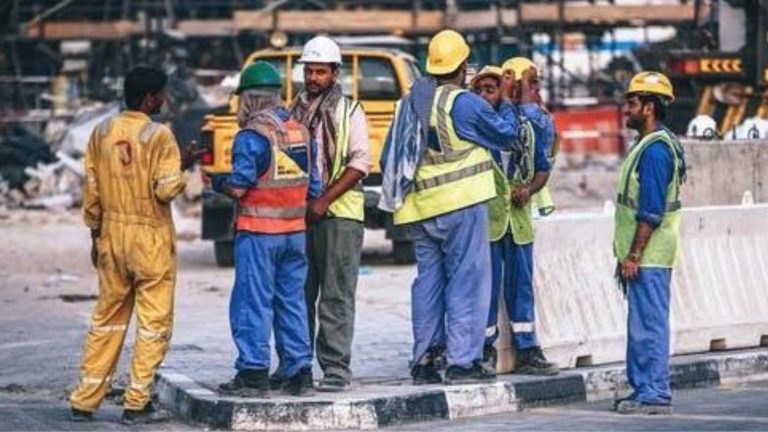
Thus, 2026 will not simply be the year of labour reforms on paper — it will be the year these reforms reshape how work is structured, regulated, and lived across India’s economy. From manufacturing floors to digital platforms, from construction sites to corporate campuses, labour codes and IR recalibration will force stakeholders to rethink old models and embrace new norms.
For workers, this means stronger duties and clearer rights. For employers, it demands adaptability and strategic workforce planning. For the state, it will mean enforcing and iterating a modern labour framework that responds to both economic competitiveness and social justice.
In this unfolding narrative of 2026, the story is not just about laws — it’s about the remaking of India’s labour landscape.