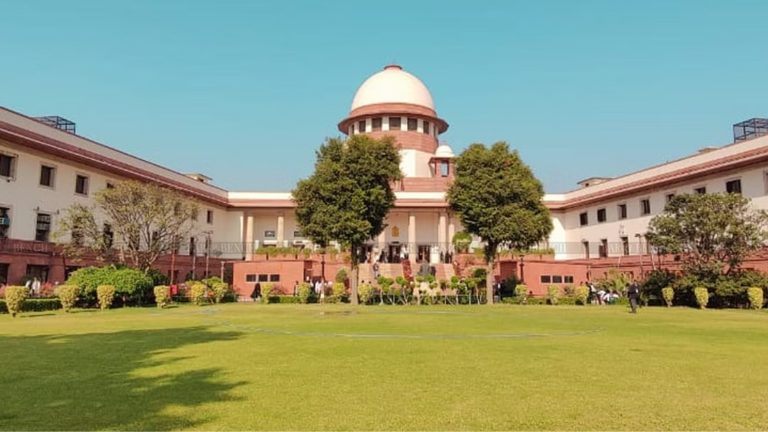
New Delhi: Bringing closure to a legal battle that spanned over three decades, the Supreme Court has ordered the reinstatement of a deceased hotel worker 34 years after his termination, while directing the employer to pay 50 per cent back wages for the period of forced unemployment.
A Bench comprising Justices Manoj Misra and Ujjal Bhuyan passed the order while hearing an appeal filed by the legal heirs of Dinesh Chandra Sharma, a former room attendant at the Jaipur Ashoka hotel, which was then run by Bharatiya Paryatan Vikas Nigam Limited (BPVNL). Sharma was dismissed from service in July 1991 on charges of misconduct.
Sharma challenged his termination before the Labour Court in 2015, which ruled in his favour the same year, holding that the dismissal was illegal and unjustified. The Labour Court ordered reinstatement with continuity of service and full back wages. Hotel management challenged the Labour Court award in high court. However, the Rajasthan High Court subsequently modified the award, reducing the back wages to 50 per cent, taking into account the long delay in raising the dispute and changes in the management of the hotel, which was later transferred to the Rajasthan government.
Also read – Maa Kudargarhi Group appoints DR. Nikhil Rao Shelar as CHRO
Although Sharma did not live to see the final order — he passed away during the course of the litigation — his legal heirs continued the fight. The Supreme Court, in its latest judgment, upheld the High Court’s reduction of back wages to 50 per cent, while reaffirming the direction for reinstatement with continuity of service and retiral benefits. The court observed that denying all back wages based on procedural technicalities would inflict undue hardship, emphasizing that stigma attached to wrongful termination can hamper re-employment.
Under the apex court’s orders, the family is entitled to about ₹33.68 lakh in back wages and associated benefits
SC reiterated that reinstatement with back wages is not automatic in cases of illegal termination. While acknowledging that wrongful dismissal causes economic hardship and stigma that can impede future employment, the court stressed the need to strike a balance between the rights of the employee and the equities favouring the employer.
The judgment reflects the Supreme Court’s settled position that back wages must be determined on a case-to-case basis, factoring in the delay in approaching adjudicatory forums, length of service, and whether the employee was gainfully employed during the intervening period. By awarding partial back wages, the court sought to ensure fairness without granting what it termed “windfall gains” after prolonged litigation.