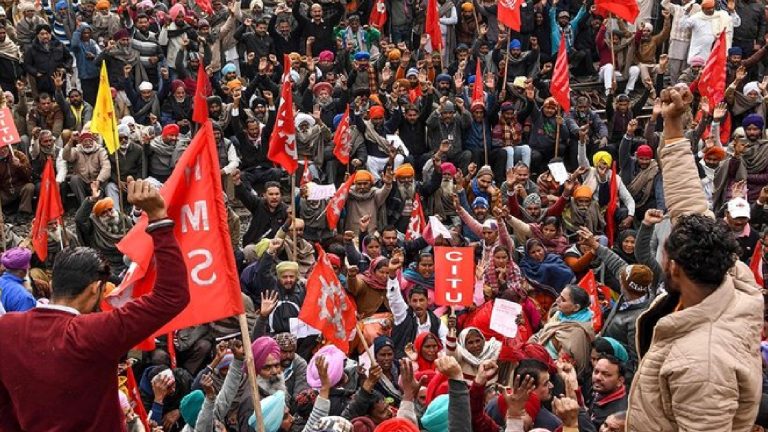
A series of protests by industrial workers demanding wage increases and improved working conditions has swept across the manufacturing hubs of Manesar, highlighting deep-rooted tensions in India’s contract labour system and raising concerns for both policymakers and industry leaders.
The unrest began in Manesar, a key automobile and manufacturing cluster in Haryana, a few days ago, when thousands of contractual workers from multiple factories staged demonstrations seeking higher wages, job security, and parity with revised minimum wage rates. The protests quickly escalated, with reports of clashes between workers and police, instances of stone-pelting, and the use of mild force by authorities to disperse crowds. Several workers and police personnel were injured during the confrontations, and prohibitory orders were imposed in parts of the industrial area to prevent further escalation. Stones were pelted at police vehicles.
At the core of the agitation is growing dissatisfaction among contractual workers, who form a significant portion of the workforce in the region. Employed through third-party contractors, many of these workers receive only statutory minimum wages .Workers have alleged that despite long hours and rising productivity demands, their wages have not kept pace with inflation and the sharply increasing cost of living.
Also read – Eight Women Employees of Nashik IT Firm File FIRs Alleging Sexual Harassment; Six Arrested, SIT Formed
The situation intensified following a recent decision by the Haryana government to increase minimum wages by 35%. While the move was intended to address worker grievances, it also triggered fresh demands for uniform implementation and wage parity across industrial units and neighbouring regions.
Economic pressures have further aggravated the situation. Workers have pointed to rising food prices and living expenses, which have significantly eroded their purchasing power. For many, basic needs have become increasingly unaffordable, making wage revisions an urgent requirement rather than a long-term demand.
In response, the state government has reiterated its commitment to enforcing revised wage structures, while local authorities have stepped up security measures to maintain order. Industry players, on their part, have begun communicating revised wage policies to workers and, in some cases, offering additional incentives such as subsidised meals or bonuses to ease tensions. However, these measures appear to have had only a limited calming effect so far.
The protests have had immediate implications for industrial operations in the region. Temporary work stoppages and disruptions have affected production in several units, particularly in the automobile and ancillary sectors for which Manesar is a critical hub. Industry experts warn that prolonged unrest could impact supply chains and increase operational costs, especially at a time when businesses are already grappling with global economic uncertainties and rising input prices.
Beyond the immediate disruptions, the developments point to a larger shift in labour dynamics. The coordinated nature of the protests—cutting across companies and sectors—suggests a growing sense of collective bargaining among workers, even in the absence of formal union structures. There is also a noticeable change in worker expectations, with demands extending beyond minimum wages to include fair compensation, job stability, and equitable treatment across regions.
For employers, the unrest underscores the risks associated with heavy reliance on contractual labour without adequate safeguards or engagement mechanisms. For policymakers, it highlights the challenges of balancing industrial growth with labour welfare, particularly in densely industrialised zones where even small policy changes can have cascading effects.
As the situation continues to evolve, both government and industry stakeholders face the task of restoring stability while addressing the underlying issues that triggered the protests. The events in Manesar serve as a stark reminder that sustainable industrial development will depend not only on economic policies but also on the strength and fairness of labour relations.