07/01/2026

Patent Disclosure in the Generative AI Era: Why Reliability Must Matter

Patent Disclosure in the Generative AI Era: Why Reliability Must Matter
Generative AI does not fit neatly into the familiar categories of patent doctrine. It is not just another drafting tool, and it is not simply a new source of inventions. It changes the relationship between text and technical work. Patent law has long treated disclosure as a proxy for reality. That proxy is now under stress.

Patent law has always depended on imperfect signals. A patent application is rarely accompanied by a working prototype, and an examiner is not expected to repeat every experiment described in a specification. Instead, the system uses legal stand-ins: enablement asks whether the disclosure teaches skilled artisans how to make and use the invention; written description asks whether the applicant possessed what is claimed; utility asks whether the asserted use is specific and credible; and prior-art doctrine asks whether the public already had access to the relevant technical teaching. These doctrines are not mere formalities. They are reliability screens.

The difficulty is that generative artificial intelligence has made plausible technical writing cheap. A large language model can prepare an application-style specification, draft prophetic examples, describe optimisation pathways, and generate pseudo-technical publications in minutes. The output may read like a serious disclosure. It may use the vocabulary of engineering, chemistry, or machine learning with confidence. But...


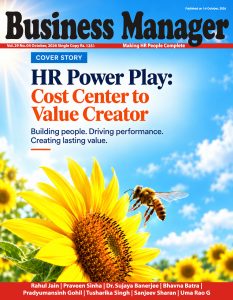
To Read The Full Story, Subscribe To Business Manager

Prabin Acharya

is a Nepal-licensed advocate and legal writer with six years of experience across governance and policy drafting. He works in U.S. immigration practice and has written on the intersection of child welfare and immigration. He holds an LL.M. from the University of California, Davis School of Law (2025).

View all posts

Author

Prabin Acharya

is a Nepal-licensed advocate and legal writer with six years of experience across governance and policy drafting. He works in U.S. immigration practice and has written on the intersection of child welfare and immigration. He holds an LL.M. from the University of California, Davis School of Law (2025).

error: Content is protected !!