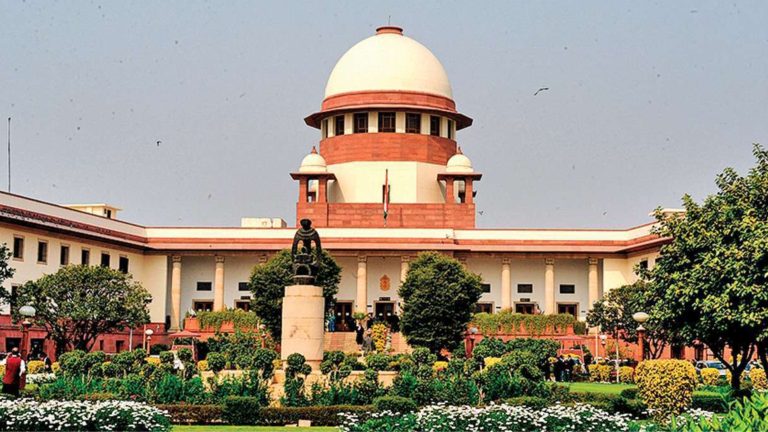
New Delhi, 3 March 2026 — In a significant interpretation of the Employees’ Compensation Act, 1923, the Supreme Court of India has held that an insurance company cannot be saddled with the statutory penalty imposed on an employer for delayed payment of compensation to a deceased employee’s dependents. The bench of Justices Aravind Kumar and Prasanna B. Varale delivered the judgment in New India Assurance Co. Ltd. v. Rekha Chaudhary & Others (Civil Appeal No. 174 of 2026) on 23 February 2026.
The case stemmed from a claim by the legal heirs of a driver who died in the course of employment. Labour commissioner initially awarded ₹7,36,680 in compensation with 12 % interest, and imposed a 35 % penalty on the employer for failing to deposit the compensation within the statutory one-month period after it became due under Section 4A of the EC Act. The employer’s vehicle was insured with New India Assurance Co. Ltd.
On appeal, the Delhi High Court shifted the primary liability — not only for compensation and interest but also for the penalty — onto the insurer. While the insurance company accepted liability for compensation and interest, it contested being made responsible for the penalty component, leading to the Supreme Court challenge.
What SC held
The Supreme Court upheld long-standing legal principles concerning the distinct nature of the liability components under Section 4A(3):
- Compensation and interest: These arise directly from the statutory obligation and can be indemnified by the insurer where a valid policy exists.
Also read – HRA and Minimum Wages Under the Wages Code: Why Employers Should Not Rush to Restructure? : Deepak Gupta
- Penalty under Section 4A(3)(b): This arises specifically due to an employer’s unjustified default in timely payment, reflecting personal fault or negligence. The court reiterated that this penalty is a statutory sanction intended as a deterrent and cannot be transferred to the insurer, even if the insurer “steps into the shoes” of the employer for compensatory obligations.
The judgment traced this principle back to earlier Supreme Court precedents such as Ved Prakash Garg v. Premi Devi and more recent cases like Sheela Devi v. Oriental Insurance Co. Ltd., reinforcing that the statutory penalty remains the personal liability of the employer.
The Supreme Court allowed the appeal in part, setting aside the High Court’s order to the extent it made the insurer liable to pay the penalty. The employer was directed to bear the penalty amount independently and to deposit it within eight weeks from the date of the order.
Social Security Code Provisions
The provision in the Code on Social Security, 2020 that is equivalent to Section 4A(3)(b) of the Employees’ Compensation Act, 1923, is Section 77(2) read with Section 133.
Section 4A(3)(b) of the 1923 Act enables a Commissioner to impose a penalty (up to 50% of the compensation) if the employer fails to pay compensation within one month and there is no justification for the delay.
Under the Social Security Code, 2020, Section 77(2): Deals with the “damages” (penalty) for default in payment of compensation, replacing the penalty provisions of Section 4A(3).Section 133: Specifies penalties for failure to pay contributions, which includes compensation, where the employer is liable for fines and imprisonment. 30-Day Notice: The Code mandates that a 30-day notice of improvement be given to the employer to rectify non-compliance before penal action. Additionally, the Code treats late payment of compensation similarly to late payment of wages, reinforcing the requirement for timely payment.