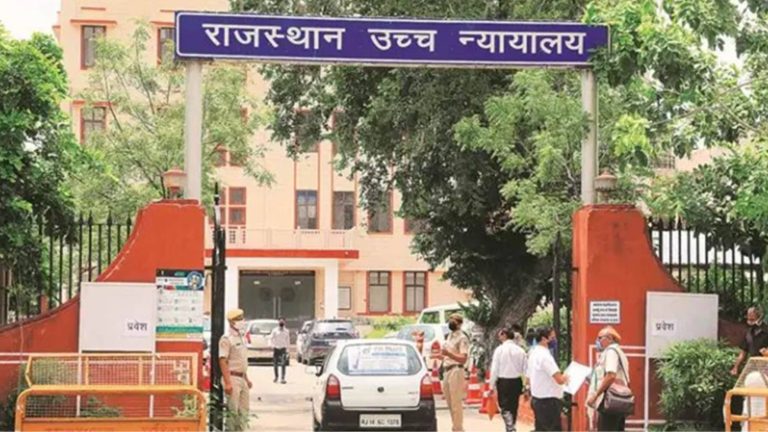
In a significant judgment addressing wage calculation for daily-wage workers, the Rajasthan High Court has held that the long-standing 26-day monthly wage formula used for daily labourers is unrealistic and unfair, especially given the ground realities of their work and subsistence needs. The court has called for correction of the existing government notification and directed both Union and State labour departments to revise wage calculation norms to reflect a 30-day month basis instead.
A single bench of Justice Anoop Kumar Dhand observed that the prevailing practice of assuming one weekly off for daily-wage workers when computing their monthly income does not align with the economic conditions most of them face. While labour laws require at least one weekly rest day, the court noted that daily-wage workers typically do not receive paid leave for these offs, forcing many to work all seven days just to meet basic needs. As a result, the assumption that they work only 26 days per month – and then awarding compensation on that basis – unfairly reduces their actual earnings and financial protection.
Also read – Flipkart appoints Yogita Shanbhag as VP- Human Resources
The case arose out of an appeal against a Motor Accident Claims Tribunal (MACT) award involving a worker who suffered a 13 % permanent disability in a motorcycle accident. One of the key arguments before the High Court was that the tribunal had used the 26-day formula to compute minimum wages, resulting in a lower compensation figure. Agreeing with the appellant that this approach was flawed, the court ruled that the minimum wages should be calculated as if the worker worked all 30 days of the month, given that most daily wagers earn only for days actually worked.
In its order, the court partially allowed the appeal by enhancing the compensation amount — adding roughly ₹33,000 plus interest at 6 % per annum — while leaving the rest of the MACT’s decision unchanged. It also emphasized that unpaid weekly rest days cannot be presumed for workers who do not get paid for those offs in practice.
Further, the High Court directed that copies of this judgment be forwarded to the relevant departments within both the Union and Rajasthan labour ministries so appropriate amendments to the minimum wage notifications and circulars can be made. This is expected to ensure that future wage assessments for daily-wage workers fairly reflect their working realities.
The judgment highlights the judiciary’s growing recognition of the economic vulnerabilities of unorganised and daily-wage workers, and may have wider implications for wage calculation and compensation cases across India.