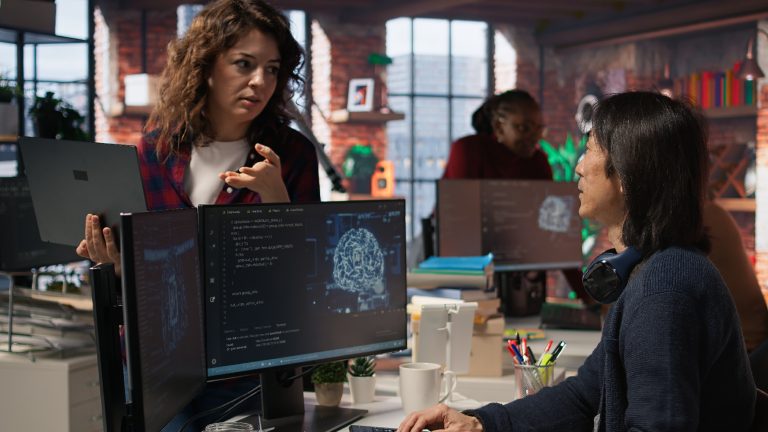
A few years ago, AI in the workplace was mostly a talking point–something for strategy decks and the future of work panels. Now it is just part of the job. It shapes how decisions get made, how we measure output, and how even the smallest daily tasks get done. In India, 93% of Gen Z employees and 95% of millennials say they are already using AI at work. That’s not a trend any more. That’s the baseline.
Here is the paradox: the more AI creeps in to our workdays, the more the human parts of work start to matter. AI is genuinely good at processing information, cutting down busy work, and speeding things up. What it can’t do is build trust between a manager and their team. It can’t make someone feel like they belong. It can’t replicate an honest, well-timed conversation.
So, the companies that will actually pull ahead in the next few years probably won’t be the ones that automated the fastest. They will be the ones who figured out where technology genuinely helps and where human judgment, empathy, and connection still need to lead. The point was never to strip humanity out of work in the name of efficiency. It’s to free people up to do the things only humans can do.
Distributed Doesn’t Have to Mean Disconnected
Work has changed shape. Teams are scattered across cities, countries, and time zones; physical proximity just isn’t the glue it used to be. But being far apart doesn’t have to mean feeling disconnected if leaders are deliberate about it.
High performance to day isn’t only about hitting numbers anymore. It is also about whether people feel trusted to actually do their jobs, supported when things go sideways, and confident enough to speak up with an idea. This matters even more as younger employees enter the workforce with a different set of expectations around growth, purpose, and well-being.
In India, 99% of Gen Z and 98% of millennial employees say a sense of purpose directly affects their job satisfaction. That’s a wake-up call for employers. People aren’t just asking what they are doing all day; they want to know why it matters.
Practically, this means leaders need to double down on transparent communication, genuine recognition, flexibility, and psychological safety. It means building in moments for people to connect that aren’t just another status meeting. A distributed team can absolutely stay close-knit, but only if someone is actively working to keep it that way.
Employee Experience Isn’t an HR Check box Any more
Employee experience used to sit quietly inside HR’s job description. Not anymore; it now shapes how people work with each other, grow in their careers, and ultimately decide whether they see a future at a company.
That means looking at the whole journey, not just isolated moments. What’s it actually like for someone in their first few weeks? Does a strong performer see a real path forward, or just more of the same? Can people access learning when their role shifts? Do they feel safe enough to raise a concern? These small, ongoing experiences usually determine whether someone stays invested or quietly looks elsewhere.
The numbers back this up, 94% of Gen Z and 97% of millennial employees in India say hands-on experience matters for their growth, and 85% of both groups are already using generative AI daily. Puts imply, people aren’t just looking for a paycheck. They want to keep learning, build skills that matter, and see a clear line between what they do and something bigger.
AI can absolutely help here, personalizing learning paths, cutting through process friction, and surfacing information faster. But the technology is only as good as the experience it creates around it. At the end of the day, employees still want to feel seen and valued, not just optimised.
Getting Ready for What’s Next
Preparing for the future isn’t just about rolling out new tools. It is equally about preparing the people who will be using them. The shift is already well underway; 93% of Indian business leaders expect to use AI agents to extend their workforce’s capabilities within the next 12–18 months, and 51% say up skilling is now a top priority. So, the real question isn’t whether companies will adopt AI. It’s whether their people will actually be ready for it.
That readiness isn’t just about technical training. It means giving employees room to experiment, learn, and occasionally fail. It means managers who can actually guide their teams through change, not just announce it. It means real career mobility, honest recognition, and support for wellbeing, not as perks, but as fundamentals. Above all, people need to understand that AI is there to extend what they can do, not replace or constantly measure them.
As AI absorbs more of the repetitive, transactional work, the uniquely human traits-empathy, judgment, creativity, curiosity, and collaboration-only become more valuable, not less. The workplace of the future will rely more on technology. That doesn’t mean it has to feel more transactional. If anything, it’s the reverse-the smarter our workplaces get, the more deliberate we will need to be about keeping them human.