07/31/2026

Leading with Purpose in an Era of AI, Agility and Global Change

Leading with Purpose in an Era of AI, Agility and Global Change
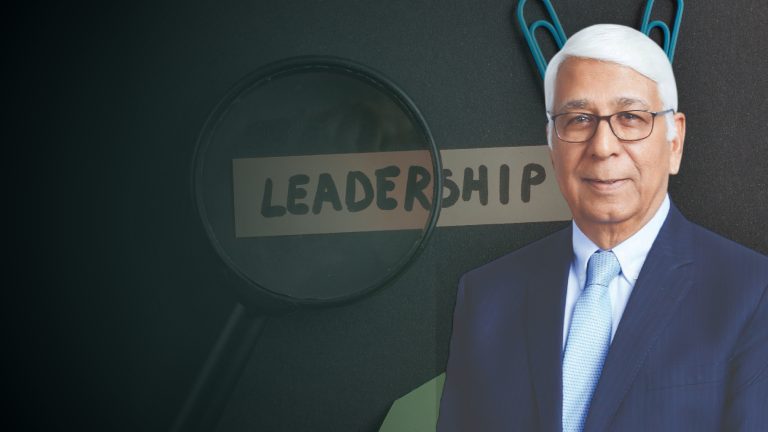
The future of leadership is no longer defined by authority alone- it is shaped by adaptability, purpose, and the ability to inspire people through constant change. As organisations accelerate digital transformation, embrace artificial intelligence, and navigate increasingly diverse, multi-generational workforces, leaders face the challenge of balancing technological progress with human values. Dr. Arvind N Agrawal understands this evolving landscape best. In this exclusive conversation, he shares why the fundamentals of leadership remain timeless even as the context changes dramatically. He discusses the skills leaders must cultivate to thrive in an AI-driven world, the importance of intellectual humility and psychological safety, the role of ethics in innovation, and the leadership qualities that will define organisations built not just to survive disruption- but to lead it.

How is the definition of leadership changing as organisations become more technology-driven and globally connected?

AN Fundamentals of leadership are constant and enduring. These don’t change. However, the specific context makes certain aspects of leadership more important and appropriate. In India today, we have multiple challenges, and some of them present contradictory tensions. For India to be globally competitive, we need to accelerate growth at scale. Our product design and quality need to be world-class at prices that meet global benchmarks. We need to embrace appropriate technology to achieve these. At the same time, we need to generate employment at scale. This produces the contradictory tension that leaders in India need to manage. We need to embrace technology and also find ways to reskill and redeploy people in a meaningful way. Leadersneedstrategic agilityto find ways to do this with full commitment to the larger purpose for which the organisation exists.

What skills should leaders prioritise to manage multi-generational, diverse, and geographically dispersed teams effectively?

AN The leaders today need to remain relentlessly curious. The illusion that a leader always has all the answers is obsolete. Instead, successful leadership involves continuous learning and adapting in real time.

Today, when teams are not only multi-generational but also scattered across time zones and cultures, leaders need to have intellectual humility. This means having genuine curiosity and an openness to learn, accompanied by the fundamental recognition that others – regardless of their age or formal title – often possess insights and knowledge that the leader does not.

This requires moving away from the outdated “command and control” model and embracing vulnerability. When leaders are willing to say, “I don’t know, let’s find out together,” they inspire their teams to innovate fearlessly and collaborate more openly.

Additionally, managing distributed and hybrid teams relies heavily on creating psychological safety. In geographically dispersed setups, it must be built through consistency, inclusive meeting practices, and intentional communication. Leaders must flex their style, ensuring that every voice is heard and valued.

Further, leaders need to bridge cultural and generational gaps by aligning everyone around shared goals and a larger purpose.

Ultimately, prioritising humility,curiosity and commitment to a larger purpose empowers teams to self-manage, handle urgent situations effectively, and stay deeply engaged, no matter where they are located and who they are.

How can leaders foster innovation while ensuring ethical decision-making and responsible use of emerging technologies such as AI?

AN AI can process vast datasets and identify patterns at lightning speed, but it lacks the capacity for moral reasoning. Therefore, leaders must step in as the interpreters and protectors of fair decision-making, providing the irreplaceable layers of context, ethics, and empathy by always remaining rooted in core values and the larger purpose for which the organisation exists.

Fostering responsible innovation means establishing clear guardrails for AI use and data privacy from day one, while keeping humans actively involved at every critical stage of design and deploymentand actively examining potential biases in AI-generated outputs.

By cultivating an environment where ethical considerations are a central pillar of the innovation process and decisions consistently map back to the organisation’slarger purpose, teams are more likely to utilise technology as a collaborator that elevates human potential.

What metrics or indicators should organisations use to assess whether their leadership is truly future-ready?

AN While traditional metrics like revenue growth and operational efficiency remain important, they are fundamentally lag indicators. To genuinely assess whether leadership is future-ready, organisations must look to lead indicators rooted in the human experience: specifically, the authentic voice of customers and employees.

The most critical indicator of effective leadership is how employees experience their day-to-day work environment. High employee engagement, psychological safety, and robust well-being are direct reflections of leadership effectiveness.

On the customer front, future-ready leadership reflects an organisation’s nimbleness in adapting to changing market needs. Customer voice metrics – such as satisfaction, loyalty, and organic brand advocacy measured through net promoter score (NPS) -indicate that leaders are successfully guiding their teams to create genuine value.

Ultimately, leadership success is validated when both employees and customers feel heard, valued, and aligned with the organisation’s trajectory.

If you had to identify one major leadership trend that will shape the future of work, what would it be and why?

AN The single most defining leadership trend for the future of work is the ability to thrive in uncertain times while carrying people and the organisationtoward the larger purpose.

We are operating in an era where volatility is the baseline. The leaders in the coming years will need to navigate this ambiguity without a clear roadmap. This requires treating resilience and adaptability as core measurable leadership competencies.

When leaders ground their organisations in a compelling, shared purpose, they provide a powerful stabilising force amidst continuous change. Purpose acts as a North Star, enabling teams to stay focused, grounded, and motivated even when the immediate path is entirely unclear. Leaders need to normalise conversations about uncertainty; offer transparency, blend accountability with compassion, and create cohesive environments where people feel secure enough to take intelligent risks.

True stability is found in the collective resilience of a deeply connected, purpose-driven team. By mastering the ability to lead through the unknown with empathy and strategic agility, leaders ensure that their organisations do not merely survive disruptions, but actively harness them to create new value.

Dr. Arvind N Agrawal

With more than five decades of corporate leadership experience spanning corporate strategy, human resources, business transformation, and executive coaching and as Managing Partner of Lead Associates, Dr. Arvind N Agarwal has witnessedand helped shapethe changing face of leadership in India. From leading HR at RPG Group and heading major businesses to mentoring senior executives and boards, Dr. Agrawal brings a rare blend of strategic insight and people-centric wisdom.He co-authored "Leaders in the Making - Crucibles of Change- Makers in HR" published by Penguin Random House in 2022.

View all posts

Author

Dr. Arvind N Agrawal

With more than five decades of corporate leadership experience spanning corporate strategy, human resources, business transformation, and executive coaching and as Managing Partner of Lead Associates, Dr. Arvind N Agarwal has witnessedand helped shapethe changing face of leadership in India. From leading HR at RPG Group and heading major businesses to mentoring senior executives and boards, Dr. Agrawal brings a rare blend of strategic insight and people-centric wisdom.He co-authored "Leaders in the Making - Crucibles of Change- Makers in HR" published by Penguin Random House in 2022.

error: Content is protected !!