In today’s fast-changing business environment, cultural development is essential for organisations to stay agile, engaged, and competitive. By aligning values, leadership behaviour, and people‑focused processes, organisations create a workplace that encourages collaboration, trust, and performance. A strong culture not only supports employees but also drives sustainable business success.
Why Cultural Development Matters:
Organisations face continuous change due to globalisation, digital transformation, diverse workforces, and evolving employee expectations. A strong organisational culture helps:
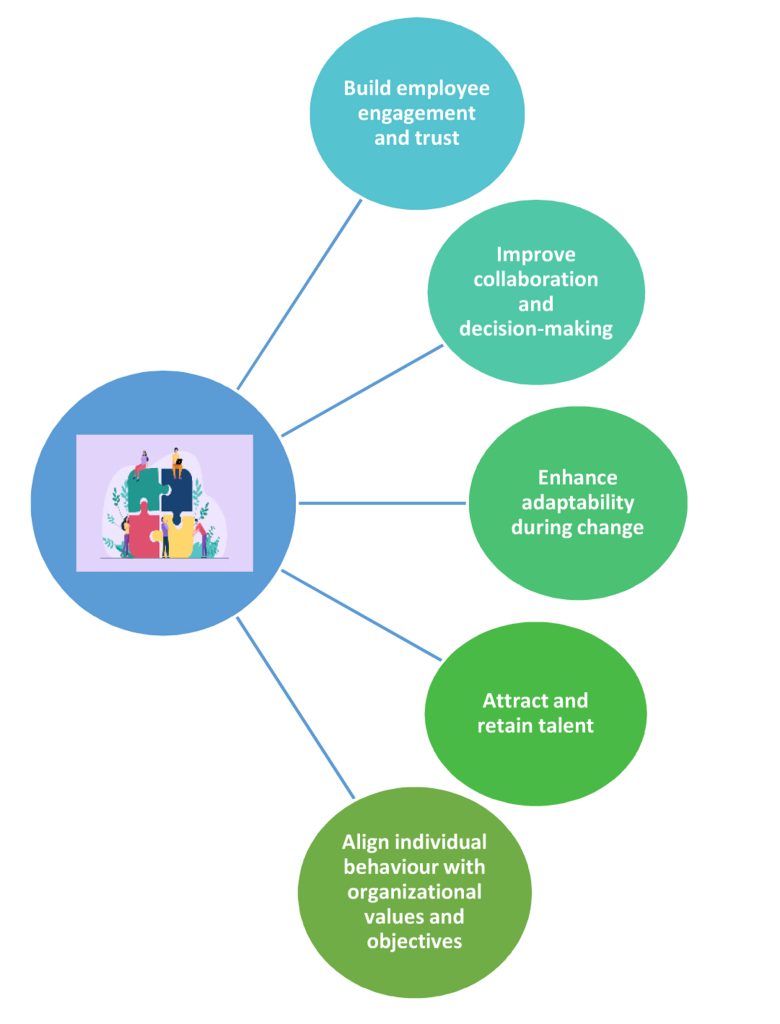
When culture is clearly defined and positively reinforced, employees feel more connected, motivated, and accountable, leading to improved performance and long‑term sustainability.
How Cultural Development Works:
Cultural development is an ongoing and structured process, not a one‑time initiative. It works through:
- Clear values and purpose: Defining what the organisation stands for and how people are expected to work and interact.
Also read – The Talent Paradox: Rethinking Workforce Strategy in the Age of Disruption – Dr. Sarmistha Roychowdhury
- Leadership role‑modelling: Leaders demonstrate desired behaviours, setting the tone for the entire organisation.
- Supportive policies and processes: HR policies, performance systems, rewards, and communication practices reinforce the culture.
- Employee involvement: Encouraging participation, feedback, and ownership helps culture grow from within.
- Consistent communication: Regular messaging ensures cultural expectations are understood and practised across all levels.
How it helps
A well‑developed culture creates a positive work environment where employees feel safe, valued, and empowered. This results in:
- Higher productivity and quality of work
- Stronger teamwork and cross‑functional cooperation
- Faster integration during growth, restructuring, or acquisitions
- Better alignment between people, practices and business goals
Ultimately, cultural development transforms values into everyday actions, helping the organisation remain resilient, competitive, and people‑centric.