07/31/2026

Building Trust, Purpose and Performance in the Future Leadership Mandate

Building Trust, Purpose and Performance in the Future Leadership Mandate
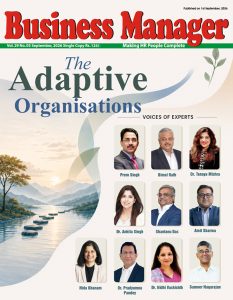
The world of work has undergone a fundamental transformation, reshaping what employees expect from leaders and what organisations need to succeed. In this conversation, Dr. Ganesh Shermon explores how leadership must evolve beyond traditional hierarchies to embrace transparency, trust, adaptability and purpose. Drawing on examples from leading global organisations and emerging high-growth companies, he explains why future-ready leaders must design inclusive systems, nurture psychological safety, balance business outcomes with employee experience, and build cultures that thrive in hybrid, technology-driven workplaces. His insights offer a compelling roadmap for organisations seeking sustainable performance in an era defined by constant change.

How are employee expectations from leaders evolving around trust, transparency, flexibility, and well-being?

GS The social contract between leaders and employees has been fundamentally rewritten since 2020, and there is no going back. Today’s workforce, particularly but not exclusively younger generations, judges leaders not by their strategic pronouncements but by their observable behaviour in difficult moments.

The traditional notion of “trust”, a bedrock of professional and social capital, is not merely declining among the newer generation, but it is functionally dead, replaced by a hyper-vigilant culture of total verification. For Gen Z and the emerging cohorts, trust is no longer a default setting to be granted until proven otherwise. In fact, it is a liability to be avoided. This is not a product of simple cynicism, but a rational survival mechanism honed in a digital landscape where the lines between reality, misinformation, and algorithmic manipulation have been permanently erased.

As a leader in the productivity software space, “Notion” exemplifies the shift toward “transparent execution. “They have built a culture that prioritises documentation and open communication, allowing employees to see the context behind decisions. This transparency reduces the need for constant managerial oversight, fostering a culture of ownership where employees feel trusted to operate autonomously.A standout in the design and AI-integrated space, Canva has pioneered a holistic approach to well-being that avoids the trap of “perk-based” wellness.By integrating well-being into their core organisational design, they demonstrate that productivity is a byproduct of a sustainable, supportive culture rather than a relentless demand for output. Their focus on empowering employees through meaningful work helps them retain talent that values impact over mere compensation.

“Eight Sleep” became a unicorn in 2026 while placing employee well-being at the centre of its culture. Leadership promotes flexible work, performance based on outcomes rather than hours, and encourages open dialogue around health and burnout. Employees increasingly expect leaders to support both productivity and physical well-being.

Known for its rigorous “written culture,” “Stripe” demonstrates how radical transparency regarding strategy and operations creates trust. By requiring most work to be documented and shared asynchronously, they create a level playing field. This practice removes the “proximity bias” (where those closest to the leader have more influence) and creates an environment of equity, a key component of the trust expected by a generation that demands visibility into decision-making.Trust is now earned through consistency rather than commanded through hierarchy.

“Patagonia’s” radical practice of openly publishing supply chain environmental data and compensation philosophy, including executive pay ratios, has generated some of the lowest voluntary attrition rates in the apparel industry. Employees do not demand perfect answers, but they demand honest ones.

“Byju’s” once India’s most valuable startup, it faced criticism over aggressive sales practices, governance shortcomings, corrupt CEO practices, delayed financial reporting, executive departures, and declining employee morale. Large-scale layoffs and leadership instability further eroded confidence among investors and employees.

Flexibility has evolved from a pandemic concession into a non-negotiable expectation. “Spotify’s “Work from Anywhere” policy, which allows employees to live and work from any country where Spotify operates, generated a 20% increase in applications from senior technical talent within months of launch. Crucially, the flexibility expectation is not just about location;it is about schedule autonomy, output orientation, and the implicit trust that adults can manage their own time. Organisations that have reimposed rigid in-office mandates without compelling justification, including several large US banks in 2024, have documented significant attrition among their highest-performing employees, who have the most alternatives. But the jury is out! A judicious mix (WFH and office mandates) is inevitable.

What leadership practices are most effective in creating inclusive, diverse, and high-performing workplaces?

GS The scepticism surrounding “diversity and inclusion” sound bites is driven by a growing perception of performativity, where corporate rhetoric often outpaces tangible, merit-based progress. Many critics argue that these initiatives have shifted from fostering genuine opportunity to enforcing identity-based quotas, which are viewed as undermining meritocracy and fostering workplace division.

Some Governments are legislating against these policies, framing them as discriminatory and ideologically driven. By mandating “color-blind” standards and prohibiting identity-conscious hiring, policymakers seek to dismantle what they define as systemic reverse discrimination, arguing that true equity is achieved by prioritising objective individual excellence over group-based characteristics.

“GitLab” is an interesting example of structural equity over identity-based posturing. Their approach relies on “Handbook-First” transparency. By documenting every process, compensation band, and decision-making framework in an open-access handbook, they eliminate the “proximity bias” that typically plagues traditional offices.

“Basecamp’s” leadership has rejected the “social-impact company” label, focusing instead on being a focused product organisation. Their form of equity is explicitly economic rather than performative. Moving away from “paternalistic benefits” (which often favour specific demographics with time or lifestyle preferences) toward high-margin profit-sharing plans.

The most effective practice is structural rather than attitudinal. Inclusive leaders design systems that reduce the influence of bias rather than relying on goodwill to overcome it. When “Salesforce” audited its pay data in 2015 and discovered unexplained gender gaps, it did not launch a diversity awareness programme; it spent $6 million adjusting salaries. That structural commitment has since become a permanent annual audit process and has demonstrably improved representation at senior levels.

“Parloa”(Germany) built multicultural engineering and customer teams across several countries. Leadership emphasises inclusive hiring, collaborative decision-making, and empowering diverse viewpoints. This diversity has accelerated innovation while enabling products that better serve global customers across languages and cultures.

Inclusive leaders actively create what researchers call “voice equity” in meetings and decision processes, ensuring that contributions are evaluated on their analytical quality rather than on the seniority or demographic identity of the person making them. “Google’s Project Aristotle” finding that conversational turn-taking (roughly equal speaking time across team members) was one of the strongest predictors of team performance has led Google and many other organisations to redesign meeting facilitation practices explicitly.

How can leaders balance business performance with employee experience and organisational purpose?

GS “Linear”, a high-growth software development tool provider, eschews the traditional “wellness-as-perks” model in favour of purpose through craftsmanship.Linear operates on the principle that the highest form of employee experience is the ability to do “deep work” on meaningful, high-quality projects without the interference of unnecessary meetings or administrative bloat.

The evidence that this is a genuine trade-off has largely collapsed. Organisations that invest in employee experience and authentic purpose consistently outperform those that treat these as soft supplements to financial performance.
The most instructive recent example is “Microsoft’s” decade-long transformation under Nadella, which demonstrates that cultural investment and financial performance are mutually reinforcing rather than competing. The company’s shift from an internally competitive “know-it-all” culture to a collaborative “learn-it-all” culture did not reduce business performance;it produced the most remarkable large-company financial turnaround of the 2010s, growing market capitalisation from $300 billion to over $3 trillion.

“Anduril”, a defence technology unicorn, demonstrates that performance and purpose can be integrated through existential urgency.Unlike organisations that struggle to define a “purpose” for HR to promote, Anduril’s purpose is self-evident: national security and sovereignty. Leaders balance this by setting an extremely high-performance bar, not as a source of burnout, but as a source of accountability.

Employee experience is often relegated to HR because line managers are disproportionately incentivised by short-term deliverables, treating purpose as a “soft” initiative rather than an operational imperative. This misalignment persists because organisations separate the science of performance from the art of management, failing to recognise that a disengaged culture is effectively a form of technical debt on operational output.

“Rippling” has scaled rapidly by maintaining a “data-first” operational culture that treats organisational agility as the core employee experience.They have operationalised the belief that bureaucracy is a form of suffering. Leaders at Rippling actively prune processes that slow down the business. They use data to optimise internal workflows, ensuring that every employee is focused on revenue-generating or innovation-driving activity.

“Tekever” (Portugal) combines rapid technological innovation with a purpose-driven mission of enhancing security and environmental monitoring. Leaders connect employees’ daily work to broader societal outcomes, increasing motivation while maintaining high standards of operational excellence and commercial growth.

Crucially, a “happy” employee is not synonymous with a productive one if happiness implies complacency. True productivity in Future of Work organisations thrives on fulfilment, not mere comfort. Without the “intellectual friction” provided by purpose, employees stagnate. Purpose must be a line management goal, not an HR decoration.
The practical leadership discipline required is framing. Leaders who consistently connect business performance goals to employee experience and organisational purpose – making explicit how excellent team wellbeing produces excellent customer outcomes – generate better results on both dimensions than leaders who treat them as separate domains.

Barry- Wehmiller”, a US manufacturing conglomerate, has explicitly embedded employee wellbeing as its primary organisational metric, with financial performance framed as the consequence of people flourishing. The company has sustained growth through multiple economic cycles, including zero layoffs during the 2008 financial crisis.

In a hybrid and digital workplace, what challenges do leaders face in maintaining engagement and culture?

GS The deepest challenge is what researchers call “proximity bias”, the unconscious tendency to favour employees who are physically present, generating a two-tier workforce in hybrid organisations. Leaders at “Cisco”, which has one of the world’s most systematically managed hybrid work programmes, discovered through internal data analysis that remote employees were receiving promotions at significantly lower rates than office-based colleagues with equivalent performance ratings, and implemented specific review process interventions to correct for this.

“Atlassian’s” “Team Anywhere” model is built on the premise that culture must be an engineered system, not a natural byproduct of office life.They employ “intentional rituals”, structured opportunities for cross-team connection, to replace the serendipity of the office. Leaders at Atlassian are mandated to lead “remote-first” meetings where everyone joins from a separate device, ensuring that those in the office do not accidentally dominate the conversation.

A second major challenge is the erosion of the informal cultural transmission that physical co-location provided. The spontaneous interactions through which organisational culture was learned, the conversations at the coffee machine, the observations of senior leaders’ behaviour in unscripted moments, do not happen naturally in digital environments and must be deliberately engineered. Atlassian schedules quarterly in-person gatherings specifically for relationship-building rather than task completion, recognising that digital collaboration performs best on a foundation of genuine human connection established in person.

“Linear” maintains high engagement by rigorously protecting the employee’s “focus time.They treat “uninterrupted time” as the organisation’s most valuable asset. Their leaders are judged not by how quickly they respond to messages, but by how well they curate a culture that minimises administrative noise.

Maintaining psychological safety in digital environments requires specific investment. People are less likely to challenge ideas or admit uncertainty on video calls than in person, generating the performative consensus that impairs decision quality. Structured practices like pre-meeting written input, anonymous idea submission, and explicit “what concerns does anyone have” prompts help compensate for what physical presence previously provided organically.

“1Password”(Canada) continues to expand with distributed global teams. Leaders intentionally invest in virtual collaboration, frequent communication, and periodic in-person gatherings to sustain culture. The challenge is maintaining employee belonging, innovation, and organisational identity when teams rarely share the same physical workplace.

What advice would you give organisations seeking to build a pipeline of future-ready leaders?

GS Four specific commitments matter most.

First, redefine what future-ready means. The most critical leadership capabilities for the next decade are not technical, and AI literacy can be developed relatively quickly. They are adaptive intelligence (the ability to lead effectively in genuinely novel situations), collaborative humility (the willingness to build on others’ intelligence rather than championing one’s own), ethical grounding (the courage to maintain values under commercial pressure), and the capacity to build psychological safety in diverse, distributed teams. Select these.

“Isomorphic Labs”(UK) demonstrates that future-ready leadership requires interdisciplinary thinking. Its leaders integrate artificial intelligence, scientific expertise, and collaborative research. Organisations should cultivate leaders who are adaptable, data-literate, ethical, and capable of leading diverse teams through continuous technological disruption.

“Figma’s” leadership pipeline is heavily filtered by a candidate’s ability to protect the team’s “maker time” (uninterrupted focus). They discourage the “manager-as- interrupt or” archetype. Future leaders are spotted not by how many meetings they command, but by how well they orchestrate “Maker Weeks” and shield their teams from the common trap of management bloat.

“Neko Health”(Sweden) grew into a unicorn by encouraging leaders to combine technological expertise with empathy and continuous learning. Organisations should identify high-potential talent early, provide cross-functional experiences, and develop leaders who can manage both AI-enabled innovation and human relationships effectively.

Second, “Shopify” engaged in a “Chaos Monkey” approach to meetings, deleting thousands of recurring meetings to force a “writing-first” culture.This was not just a productivity hack; it was a vetting mechanism. Future leaders at Shopify are those who can replace a 60-minute meeting with a 5-minute, high-clarity document. If a leader cannot articulate a project’s strategy, risks, and success metrics in writing, they are not positioned for the next level of management.

Third, “Zapier” has been a 100% distributed organisation for over a decade. Their handbook is not a wiki. It is the organisation’s “source code.” Zapier hires and promotes leaders based on their “bias for action” within the handbook. They require that every leader update the documentation while they are executing a project. They don’t promote people who “manage tasks”. They promote people who “update the commons”, the ones who improve the processes for everyone else.

Finally, measure leadership quality with the same rigour applied to financial performance. Leaders whose teams consistently show high attrition, low psychological safety scores, or poor diversity progression should face the same accountability as those who miss revenue targets. When leadership quality becomes a measured organisational outcome rather than a subjective impression, the pipeline development investment follows. Perhaps the world’s best-known example of leadership failure. “WeWork” (Valuation: US$47 Billion). Founder-led leadership encouraged excessive risk-taking, poor governance, conflicts of interest, and a personality-driven culture. Employee turnover increased while transparency and accountability declined. The board overlooked behavioural issues because revenue growth appeared impressive.

“Theranos” (Valuation: US$9 Billion) is yet another case of leadership failure. Employees reportedly feared questioning leadership. Scientists who raised concerns faced retaliation or dismissal, creating extremely low psychological safety. The organisation rewarded loyalty over transparency, preventing critical technical problems from being openly discussed.

“Revenue tells us how the business performed yesterday. Leadership metrics tell us whether the organisation will still be performing tomorrow. The most expensive leadership failures rarely begin in the income statement; they begin in disengaged teams, silent employees, and cultures where people no longer feel safe to challenge poor decisions.”

Dr. Ganesh Shermon

KPMG LLP - Rt, is a Managing Partner with Advisory Channels Inc., Toronto, Canada.

View all posts

Author

Dr. Ganesh Shermon

KPMG LLP - Rt, is a Managing Partner with Advisory Channels Inc., Toronto, Canada.

error: Content is protected !!