07/31/2026

Blending Technology, Agility and Human-Centric Values

Blending Technology, Agility and Human-Centric Values
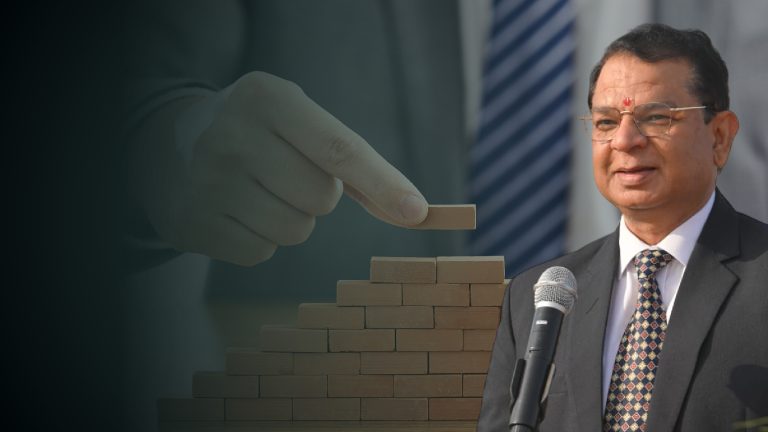
The nature of leadership is undergoing a profound transformation. Rapid advances in digital technologies, the rise of artificial intelligence, global business integration, and evolving workforce expectations are redefining what it means to lead successfully. Today's leaders are expected not only to deliver business results but also to inspire innovation, nurture talent, and build resilient organisations capable of thriving amid constant change. In this exclusive interview, Narendra Kumar, Sr. President - Operations at Balakrishna Industries Ltd. (BKT), shares his perspectives on the changing face of leadership. Drawing on over four decades of experience in manufacturing and operations, he discusses how leaders can navigate digital transformation, manage diverse and multi-generational teams, foster responsible innovation, and prepare organisations for the future of work. His insights highlight the importance of combining technological understanding with empathy, adaptability, and a strong people-first approach to leadership.

How is the definition of leadership changing as organisations become more technology-driven and globally connected?

NK Over the past four decades, the definition of leadership has undergone a significant transformation, driven by technological advancement, globalisation, and changing workforce expectations. Broadly, this evolution can be viewed in three distinct phases. The first phase was characterised by instruction-driven leadership, where knowledge was transferred through a buddy system, and leaders primarily directed employees on what to do. This was followed by the training-driven, command-and-control model, where organisations focused on standardisation, compliance, and operational discipline. The emergence of quality systems and structured management practices reinforced this leadership approach across many industries.

Today, however, organisations are rapidly transitioning to a third phase- one that emphasises talent identification, continuous learning, knowledge sharing, and empowerment. Traditional hierarchical leadership models are gradually becoming less relevant as organisations become more technology-driven and globally connected. The modern workforce, particularly younger professionals, is digitally native, highly informed, and comfortable leveraging AI and digital tools to solve problems. They expect autonomy, purpose, and opportunities to contribute rather than simply execute instructions.

Consequently, leadership today is less about exercising authority and more about creating influence. Leaders must inspire trust, foster collaboration, and build an environment where innovation can thrive. Digital competency has become a core leadership capability, enabling leaders to understand emerging technologies and guide their teams through digital transformation. Equally important are agility and adaptability, as organisations must respond quickly to changing market dynamics, customer expectations, and global disruptions. Finally, decision-making is increasingly data-driven, requiring leaders to combine analytical insights with sound business judgment.

In essence, the future of leadership lies in enabling people rather than controlling them. Leaders who can blend technological understanding with empathy, empowerment, and strategic thinking will be best equipped to build resilient, innovative, and globally competitive organisations.

What skills should leaders prioritise to manage multi-generational, diverse, and geographically dispersed teams effectively?

NK A multi – generational, diverse team requires the following skill set to manage the team –

A respect for senior team members based on their skill set, and we must use their experience to guide & Coach young leaders. The ability to influence and coach will be key to success.

A highly adoptable approach to take care of cross-functional teams – knowledge / Experience must be shared quite freely.

A respect for even youngsters, Grooming culture and ability to listen to even small matters, so that a culture of mixing across the age group is facilitated.

Decisions must be made data-driven, and no room should be left for any ambiguity.

With the above skills, we can manage diverse team members quite successfully in any team.

How can leaders foster innovation while ensuring ethical decision-making and responsible use of emerging technologies such as AI?

NK We have to create an atmosphere of listening among team members so that all team members view point is taken in to considerations.

We must give the freedom of doing with the help of AI to fulfil the team’s requirements.

AI sometimes gives quite vague answers and looks attractive, but is impractical in nature. No two people are the same; no organisation is the same; no location is the same, so how can AI-generated answers be useful to all in multi-locational teams? So, AI can be used, but the human brain will be supreme even with AI to take final decision. Can AI solve the complex issues of Industrial relations? Not at all.

The senior team members should be given the freedom to use AI, but the final decision has to be made using all factors on the table on that day. AI can only suggest, but cannot replace human intervention in decision-making.

What metrics or indicators should organisations use to assess whether their leadership is truly future-ready?

NK Assessing whether leadership is truly future-ready requires looking beyond conventional performance metrics. While business outcomes remain important, organisations must evaluate whether their leaders are building the capabilities needed to thrive in an environment of constant change.

One of the most important indicators is the organisation’s adaptability to change- whether in embracing new technologies, responding to market shifts, or fostering a culture that welcomes innovation. Leaders who encourage learning, experimentation, and agility are better equipped to prepare their teams for future challenges. Another critical metric is the strength of the leadership pipeline. A future-ready organisation should have a robust grooming culture backed by genuine succession planning. Leadership development cannot be limited to the top tier; it must extend to the third and even fourth levels of management. When organisations consistently identify and develop high-potential talent, they ensure continuity and resilience.

Equally important is the ability to identify tomorrow’s leaders early and expose them to diverse experiences. Cross-functional assignments, multi-location roles, and challenging projects help individuals develop broader business perspectives and stronger decision-making capabilities. These experiences create leaders who are versatile and ready to lead in complex environments. Finally, one of the strongest indicators of future readiness is whether the organisation is system-driven rather than individual-driven. Sustainable organisations are built on robust processes, governance, and institutional knowledge rather than dependence on a few exceptional individuals. When systems, values, and capabilities outlast any one leader, the organisation becomes truly resilient. These indicators collectively provide a meaningful measure of leadership readiness for the future. However, building such an organisation demands sustained commitment, disciplined execution, and patience. It is far easier to articulate these principles than to consistently embed them into the organisation’s culture and way of working.

If you had to identify one major leadership trend that will shape the future of work, what would it be and why?

NK Leadership in the future of work will be defined by the ability to lead through continuous change. If I had to identify one trend that will have the greatest impact, it would be adaptive leadership powered by technology, but grounded in people. Manufacturing is undergoing a fundamental transformation. Digital technologies, automation, AI, and data analytics are redefining how we operate, make decisions, and create value. However, technology alone will never be the differentiator. The real advantage will come from leaders who can help people embrace change, build new capabilities, and remain engaged in an increasingly dynamic environment.

The leaders of tomorrow will need to balance operational excellence with empathy. They must be comfortable making decisions in the face of uncertainty while fostering a culture where learning, experimentation, and cross-functional collaboration become everyday practices. In an industry where change is accelerating, the ability to reskill teams, encourage innovation on the shop floor, and empower employees to solve problems will be as important as achieving productivity and cost targets.

Another critical aspect of adaptive leadership is creating resilience-both at an organizational and individual level. Supply chain disruptions, shifting customer expectations, sustainability imperatives, and evolving workforce aspirations require leaders who can respond quickly without losing sight of long-term strategic goals. Ultimately, the future of work will not be about replacing people with technology; it will be about enabling people to achieve more through technology. Leaders who combine digital fluency with a genuine commitment to developing their people will build organisations that are not only more efficient but also more innovative, agile, and sustainable. In my view, that balance between technological progress and human-centric leadership will define successful organisations in the years ahead.

(Views are personal)

Narendra Kumar

is Sr. President - Operation, Balakrishna Industries Ltd (BKT), Bhuj, Kutch, Gujarat.

View all posts

Author

Narendra Kumar

is Sr. President - Operation, Balakrishna Industries Ltd (BKT), Bhuj, Kutch, Gujarat.

error: Content is protected !!