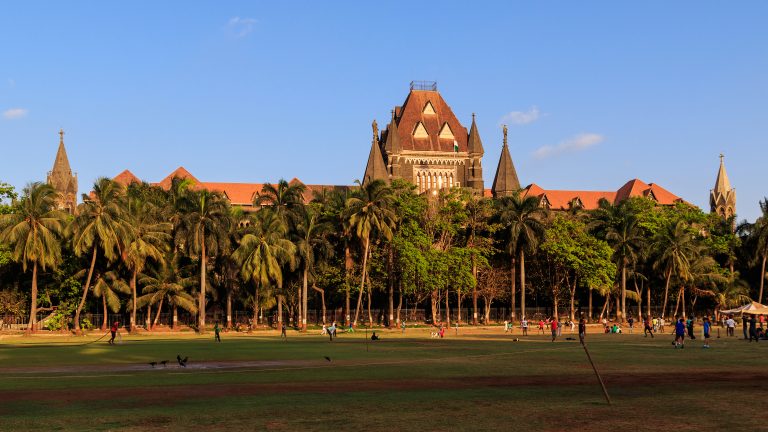
The Bombay High Court has held that an Industrial Tribunal cannot adopt a hyper-technical approach to defeat an employer’s action of removing an employee found guilty of serious corruption merely because of an alleged minor shortfall or deduction in the one month’s wages required to be paid under the proviso to Section 33(2)(b) of the Industrial Disputes Act, 1947.
Bombay HC while allowing Writ Petition No. 10116 of 2015 in the case of , Dr. Satish Bhide for and on behalf of Municipal Corporation of Greater Mumbai v. Ravindra M. Pande, set aside the Industrial Tribunal’s orders which had refused approval to the employee’s removal and ultimately granted approval to the Municipal Corporation’s action.
The respondent, Ravindra M. Pande, was working as a Clerk in the Octroi Department of the Municipal Corporation of Greater Mumbai (MCGM). The disciplinary proceedings established serious misconduct against him relating to the diversion of an octroi refund of Rs. 4,10,885 to a third-party account. The Court noted that an amount of Rs. 1,50,000 was subsequently withdrawn and allegedly received by the respondent as a kickback.The Industrial Tribunal had found that the domestic enquiry was fair and proper and that the findings of misconduct were not perverse. Thus, the employee’s guilt was not the issue before the High Court.
The Municipal Corporation had removed the employee from service on 30 November 2006 and simultaneously sought approval under Section 33(2)(b) because an industrial dispute was pending.
The dispute essentially concerned compliance with the requirement under Section 33(2)(b) to pay one month’s wages while seeking approval for dismissal during the pendency of an industrial dispute.
Also read – Leaders of The Future Will Be Defined By Their Humanity, Values, and Moral Courage : Dr. T. V. Rao
The Industrial Tribunal, however, rejected the approval application on 7 May 2010, principally relying on the payslip for November 2006. It noticed deductions towards provident fund, LIC, income tax and other items and also observed that an increment allegedly due to the employee had not been included.
The Tribunal consequently concluded that the requirement of payment of one month’s wages under Section 33(2)(b) had not been complied with.
The Corporation subsequently pointed out that the statutory one month’s wages had been separately offered to the employee and that Rs. 14,468 had been remitted to him through money order after he refused to accept the amount at the workplace. The Tribunal nevertheless rejected the Corporation’s review application .
The High Court disagreed with the Tribunal’s approach. Court observed that the Tribunal had incorrectly treated the employee’s regular November 2006 salary as the one month’s wages contemplated by Section 33(2)(b). The Court explained that the wages contemplated under the statutory proviso are an additional payment intended to provide immediate financial protection or “solace” to an employee whose services are terminated during the pendency of an industrial dispute.
The Court also noted that the Corporation had produced evidence showing a separate offer and remittance of Rs. 14,468 towards the statutory one month’s wages. The Tribunal had failed to properly consider this material evidence.
The High Court further held that even assuming there was some deficiency in the amount paid, the appropriate course would not necessarily be to reject approval of the dismissal.
Relying upon the principles laid down by the Supreme Court, including in S. Ganapathy v. Air India, the Court observed that where a deficit is established, the Tribunal can direct the employer to deposit the deficit amount while granting approval rather than invalidating the entire disciplinary action.
The Court emphasized that Section 33(2)(b) is intended to protect employees during the pendency of industrial proceedings, but that protection cannot be converted into a technical device to defeat a disciplinary action based on proved grave misconduct.
Court observed that the provision is intended to provide some “solace” to an employee and “is not aimed at creating technical grounds for setting aside removal/dismissal” in cases involving grave misconduct.The Court took particular note of the nature of the misconduct established against the respondent.
It observed that the Tribunal’s hyper-technical approach could result in a situation where an employee found guilty of serious corruption would obtain reinstatement with full back wages merely because of a dispute concerning deductions or a relatively small deficit in the statutory wage payment.The High Court held that such an approach would defeat the purpose of the statutory provision.
The Court also distinguished cases where no wages at all had been paid under Section 33(2)(b), observing that such cases stand on a different footing from the present matter, where the Corporation had actually offered and remitted a separate amount towards one month’s wages.
Allowing the writ petition, the Bombay High Courtset aside the Industrial Tribunal’s order dated 7 May 2010 rejecting the Corporation’s approval application set aside the Tribunal’s order dated 5 January 2012 rejecting the review application; andgranted approval to the Municipal Corporation’s action of removing Ravindra M. Pande from service pursuant to the removal order dated 30 November 2006.
The decision reinforces that while the requirement under Section 33(2)(b) to pay one month’s wages is an important statutory protection and cannot simply be ignored, a minor or disputed deficiency in payment should not automatically result in the rejection of approval for dismissal, particularly where serious misconduct has been established and the employer has substantially complied with the statutory requirement.
The judgment also makes clear that an Industrial Tribunal should avoid a hyper-technical interpretation that could result in reinstatement and back wages for an employee whose grave misconduct has already been proved.