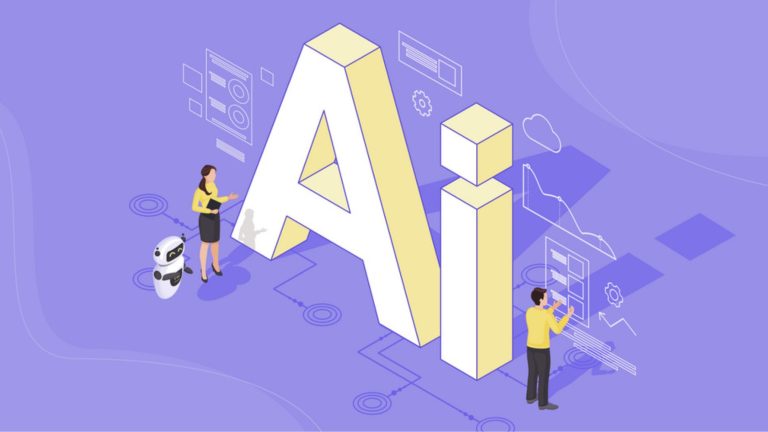
The rise of AI is not a future consideration for engineering organisations; it is a present reality. Across industries, companies are rethinking how work gets done, what capabilities matter most, and how their organisations need to evolve to remain competitive. For technology-driven businesses, this shift is happening quickly. The pace of change is relentless, the opportunities are vast, and the challenge is no longer whether to adapt, but how to do so with clarity and purpose.
For engineering organisations in particular, the answer is not simply to adopt more technology. It is to build an environment where innovation can thrive, collaboration can scale, and people can continuously grow alongside the tools they use. Over time, a few lessons have become clear.
Design With Intentionality
In an era of rapid technological advancement, it is easy to be distracted by what is possible rather than what is necessary. Organisations are surrounded by new tools, platforms, and AI applications, each promising transformation. But progress is most effective when it begins with intentionality.
Also read – POSH Research Finds India’s Workplace Harassment Crisis Extends Far Beyond the Office
That means starting with the need: What problem are we trying to solve? What outcome are we trying to achieve? Only then should technology enter the conversation as an enabler of better, faster, or more effective execution.
This mindset helps organisations avoid being overwhelmed by the sheer number of possibilities. It creates focus, sharpens priorities, and ensures innovation is rooted in value rather than novelty. The most meaningful advances do not come from using technology for its own sake, but from applying it with precision to solve real challenges.
Use Technology to Strengthen Collaboration
Some of the most impactful innovations do not emerge in isolation. They are the result of diverse perspectives coming together — across engineering disciplines, business functions, and areas of expertise. As systems become more connected and challenges more complex, multidisciplinary collaboration becomes a true competitive advantage.
Technology plays an essential role in enabling that collaboration. Digital tools, shared platforms, and AI-enabled workflows can help teams communicate faster, solve problems more effectively, and learn from one another in real time. But the real value lies not in the tools themselves, but in what they make possible: stronger connections between people, ideas, and outcomes.
Make Innovation Continuous, Not Episodic
Too often, innovation is treated as something occasional — a workshop, a pilot, a campaign, or a one-time initiative. But in today’s environment, innovation cannot be episodic. It must become part of how the organisation operates every day.
Engineering organisations need to build cultures where curiosity is encouraged, experimentation is normalised, and improvement is expected at every level. AI is accelerating this need. As technologies evolve, organisations must be prepared to evolve with them — with ongoing momentum rather than isolated bursts.
<head><script async src=”https://pagead2.googlesyndication.com/pagead/js/adsbygoogle.js?client=ca-pub-6274442986372300″
crossorigin=”anonymous”></script></head>
This requires more than leadership messaging. It means equipping people to think differently, act with agility, and see change as an opportunity rather than a disruption. When innovation becomes embedded in the culture, organisations are better positioned to respond to market shifts, unlock new value, and attract top talent.
Enable Continuous Learning in the Flow of Work
As AI continues to reshape engineering, operations, sales, and other functions, learning can no longer be viewed as something separate from work. Skills are evolving too quickly for traditional approaches alone to keep pace. Continuous learning must become part of the everyday employee experience.
Many organisations are already seeing value in creating regular opportunities for people to share how they are using AI in practical ways — whether to improve productivity, enhance decision-making, or solve technical problems. These moments of shared learning are powerful because they are immediate, relevant, and grounded in real work.
For our employees, the opportunity to keep learning, experimenting, and building new capabilities is often just as important as the role itself. Organisations that embed learning into the flow of work are not only better prepared for change; they are also more attractive to talent that wants to grow with the organization.
Keep People at the Centre of Change
Amid all the focus on AI, systems, and transformation, one truth remains constant: change only succeeds when people are supported through it.
Organisations cannot build the future without bringing their workforce with them. Creating clarity during times of uncertainty, investing in capability-building, and ensuring employees feel empowered rather than displaced by changeare all critical to enabling successful transformation..We need to recognise that transformation is not only operational, but human.
The strongest organisations will be those that combine technological ambition with genuine commitment to their people. They will uplift employees, guide them through transition, and create a culture where individuals feel confident in their ability to adapt and contribute. In the age of AI, leadership will be defined not only by how boldly organisations pursue innovation, but by how effectively they prepare their people to succeed within it.