07/31/2026

Why Trust, Adaptability and Human Wisdom Will Define the Next Era of Leadership

Why Trust, Adaptability and Human Wisdom Will Define the Next Era of Leadership
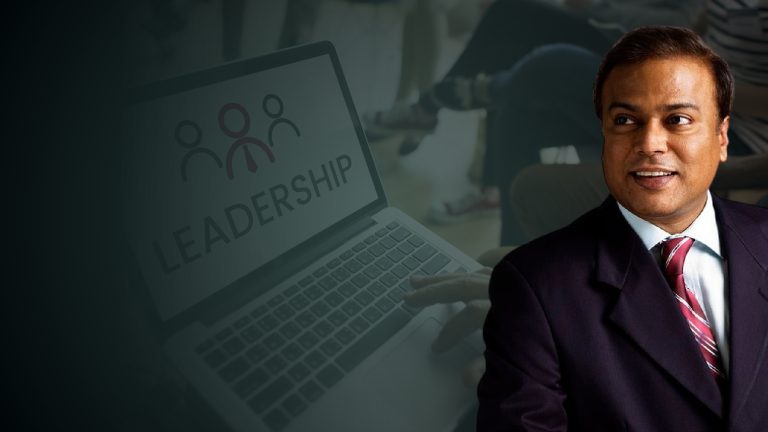
As organisations navigate an era of unprecedented disruption, leadership is being redefined by the convergence of artificial intelligence, geopolitical shifts, evolving workforce expectations and rapid technological change. In this conversation, Rajesh Padmanabhan shares his perspective on what it takes to lead successfully in an environment where uncertainty is constant, and transformation is continuous. He argues that the leaders of tomorrow will be distinguished not only by their ability to harness technology but also by their capacity to build trust, foster adaptability, develop emotionally intelligent organisations and create cultures of continuous learning. Drawing on decades of leadership experience across industry and consulting, Rajesh outlines why human judgement, resilience and purpose-driven leadership will remain the most enduring competitive advantages in an increasingly AI-powered world.

What are the biggest disruptions that leaders should be preparing for over the next five years?

RP The next five years will not be defined by a single disruption, but by the convergence of multiple forces that are fundamentally reshaping the way organisations compete, grow and lead. AI, geopolitical realignment, talent transformation, sustainability, cyber resilience and emerging technologies like quantum are all important in their own right, but the real challenge lies in how they interact and amplify one another. In my view, the biggest risk for leaders is not being unprepared for technology-it is being anchored to yesterday’s assumptions. The organisations that will succeed are those willing to continuously unlearn, redesign their operating models and build adaptability into their DNA. Culture, therefore, moves from being a “soft” issue to a strategic differentiator, determining how quickly people embrace change and execute strategy. Equally, trust will become one of the most valuable leadership currencies-trust in AI, trust in institutions, trust in data and, above all, trust in leadership during periods of uncertainty. While technology will automate processes and augment decisions, it will also increase the premium on distinctly human qualities such as judgement, ethics, curiosity, resilience and the ability to inspire confidence. The future will not belong to organisations with the best technology alone, but to those that combine technological capability with human wisdom, organisational agility and a relentless learning mindset. The question leaders should be asking is no longer, “What disruption is coming next?” but “Are we building an organisation that can thrive regardless of what comes next?

How can leaders drive successful transformation while managing resistance, uncertainty, and workforce anxiety?

RP Successful transformation is rarely about changing strategy or implementing technology-it is about earning the confidence of people to embrace an uncertain future. In my experience, resistance is often misunderstood. Employees are not necessarily resisting change; they are trying to make sense of what the change means for them, their teams and their future. The role of leadership, therefore, is not to eliminate uncertainty but to reduce unnecessary ambiguity through honest communication, visible commitment and consistent actions. I have also found that the most successful transformations are those where leaders distinguish between what is non-negotiable-the strategic intent-and what can be co-created with the organisation. Giving people a voice in shaping the journey creates ownership without compromising direction. Equally important is recognising that transformation is not an event but an organisational capability. In a world where disruption is becoming continuous, leaders must build cultures that are comfortable with learning, unlearning and adapting repeatedly. That requires investing disproportionately in frontline and middle managers, who translate strategy into everyday behaviours and influence the employee experience more than any CEO communication ever can. Finally, transformation succeeds when trust exceeds fear. People can navigate uncertainty, accept difficult decisions and even embrace radical change when they believe their leaders are authentic, competent and acting with integrity. Technology may accelerate transformation, but trust sustains it. Ultimately, the organisations that will thrive are not those that simply manage change better, but those that build the resilience, confidence and adaptability to make change part of their organisational DNA.

What role does emotional intelligence play in leadership effectiveness in today’s environment?

RP Emotional Intelligence has never been more relevant to leadership than it is today-not because organisations need kinder leaders, but because they need leaders who can deliver superior business outcomes in an environment defined by uncertainty, disruption, and relentless change. As AI increasingly augments analysis, decision support and even creativity, the real differentiator for leaders shifts to what technology cannot easily replicate: judgement, self-awareness, trust-building, and the ability to mobilise people behind a common purpose. In my experience, leadership effectiveness is rarely tested when markets are stable; it is revealed when decisions are difficult, information is incomplete, and emotions run high. This is where Emotional Intelligence becomes a strategic capability. Leaders with high EI don’t avoid tough conversations or difficult decisions; they navigate them with authenticity, clarity, and respect, preserving trust even when outcomes are unpopular. Equally important is recognising that emotions are contagious. A leader’s composure, optimism, and resilience are amplified across the organisation, just as anxiety and inconsistency are. In an era of continuous transformation, leaders are not merely managing businesses-they are managing human energy. The organisations that will thrive are those where people feel challenged but not threatened, empowered but accountable, and valued while being stretched to deliver exceptional outcomes. Perhaps the biggest misconception is that Emotional Intelligence is a ‘soft skill’. I see it as leadership discipline-the ability to balance empathy with accountability, confidence with humility, and speed with thoughtful judgement. As technology continues to democratise technical expertise, Emotional Intelligence will increasingly distinguish leaders who simply manage performance from those who inspire commitment, build enduring institutions, and leave behind a leadership legacy rather than just a business result.

How should leadership development programs evolve to equip leaders with the skills needed for future challenges?

RP Most leadership development programs today are still designed for a world that no longer exists-structured around episodic learning, fixed competency frameworks and classroom-heavy interventions that assume stability, hierarchy, and predictable skill requirements. The shelf life of leadership capability is shrinking rapidly, and the real constraint is no longer knowledge transfer but adaptive capacity. What organisations now need is a fundamental redesign of leadership development from events to ecosystems. The most effective approaches are continuous rather than episodic, embedded in real work rather than simulated environments, and anchored in live strategic challenges rather than generic case studies. Leaders learn best when they are solving problems that matter, under real constraints, with structured reflection and coaching that help convert experience into insight and behaviour change. Equally important is shifting the focus from static competencies to the ability to learn, unlearn and relearn-developing leaders who are comfortable with ambiguity, capable of holding competing hypotheses, and skilled in navigating uncertainty without defaulting to oversimplification. Another critical shift is from hierarchical leadership models to ecosystem leadership, where influence extends across functions, partners, regulators, and platforms, often without formal authority. Increasingly, leadership development must also prepare leaders for human-AI collaboration-building the judgement to interrogate algorithmic outputs, understand their limits, and retain accountability in AI-augmented decision-making environments. Finally, organisations must move from developing individual leaders to building leadership as a system capability, where culture, processes, and sponsorship at the top collectively shape how leadership is produced and sustained. The organisations that will outperform are not those that run the most sophisticated programs, but those that treat leadership development as a strategic operating system for execution, adaptability, and long-term resilience.

Can you share an example of a leadership practice or approach that you believe will become increasingly important in the future?

RP One leadership practice I believe will become disproportionately important over the next decade is the shift from traditional career-path thinking to a “just-in-time, role-relevancy” model of leadership-combined with a much deeper emphasis on sense-making as a core leadership discipline. The classic notion of linear career tracks, stable job families and long-role tenure is already breaking down. Increasingly, work will be organised around time-bound, outcome-specific roles shaped by business needs, project cycles and ecosystem demands rather than predefined hierarchies. In this context, leadership effectiveness will depend far less on positional continuity and far more on how quickly individuals can step into relevance, deliver impact, and then transition to the next context. This creates a paradox: roles become shorter in life cycle, but the expectations on human capability within those roles become significantly higher. Technical skills will be table stakes, increasingly augmented or even executed by AI, while what will differentiate outcomes is human capability-judgement under ambiguity, trust-building in fluid teams, emotional intelligence, adaptability, humility, curiosity and the ability to make sound decisions without complete information. Within this environment, I believe sense-making becomes the critical leadership glue. Leaders will not just be expected to allocate work or drive execution; they will need to continuously help people interpret what is happening around them, why it matters, and what it means for their role in that moment. This combination-short-cycle, high-intensity roles embedded in continuous uncertainty-demands leaders who can provide clarity without oversimplification and direction without false certainty. In many ways, the future will belong to leaders who can operate comfortably in impermanence while still creating stability of meaning, trust, and purpose for their teams.

Rajesh Padmanabhan

is a business leader and entrepreneur with over three and half decades of experience spanning industry, consulting, and entrepreneurship.Currently, Rajesh plays multiple strategic roles as Chairman of HONO, MD of Ex Co Group India, Founder and CEO of Talavvy and Group Chair of Leaders Edge, Link CXO & Exotalent. Through these ventures, he partners with boards and CEOs globally on leadership advisory, digital transformation, executive coaching and business success scalability. Rajesh is widely regarded as a thought leader who brings talent, technology, and transformation together. A recipient of UN award for building a diverse and Inclusive workplace at Capgemini, a qualified life coach advising corporate executives, cricketers, celebrities, and entrepreneurs, and a speaker at leading academia plus industry forums.

View all posts

Author

Rajesh Padmanabhan

is a business leader and entrepreneur with over three and half decades of experience spanning industry, consulting, and entrepreneurship.Currently, Rajesh plays multiple strategic roles as Chairman of HONO, MD of Ex Co Group India, Founder and CEO of Talavvy and Group Chair of Leaders Edge, Link CXO & Exotalent. Through these ventures, he partners with boards and CEOs globally on leadership advisory, digital transformation, executive coaching and business success scalability. Rajesh is widely regarded as a thought leader who brings talent, technology, and transformation together. A recipient of UN award for building a diverse and Inclusive workplace at Capgemini, a qualified life coach advising corporate executives, cricketers, celebrities, and entrepreneurs, and a speaker at leading academia plus industry forums.

error: Content is protected !!