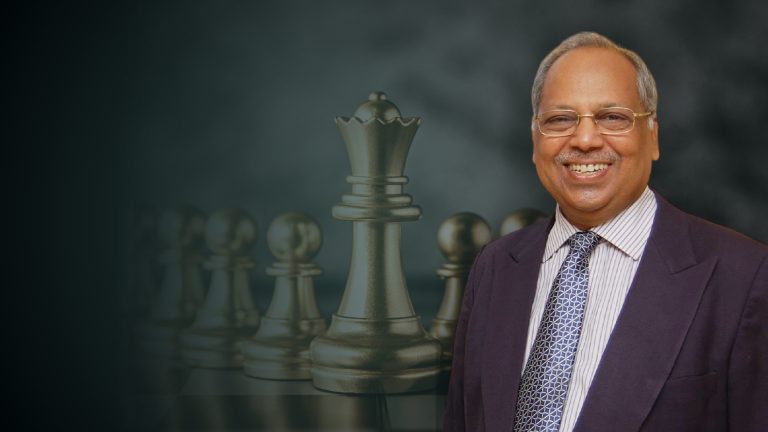
As the world undergoes rapid technological, economic, and geopolitical shifts, leadership is being tested in unprecedented ways. According to Dr. T. V. Rao - Chairman of TVRLS, Co Founder of NHRDN, and one of India's foremost architects of HRD - the leaders of the future will not be defined by power, position, or technological mastery alone, but by their humanity, values, and moral courage.
Dr. Rao observes that technology has placed the world in every individual's pocket, yet global institutions have weakened, inequalities have widened, and many leaders have become more self serving than society serving. In such a world, he argues, the most future ready leaders will be those who can remain deeply human: compassionate, ethical, inclusive, and committed to the welfare of all - especially the vulnerable. Leadership, he insists, must transcend boundaries of geography, religion, caste, and community, and treat every human being with dignity. Artificial intelligence, in his view, is reshaping leadership priorities dramatically. He describes AI as "collective global intelligence" - powerful, fast, and transformative, but also prone to bias and misuse. Leaders must therefore become "more intelligent than the intelligence they use." AI can diagnose diseases, predict trends, and solve complex problems, but it can also amplify greed, job loss, and inequality if used without a moral compass. The leaders of tomorrow must use AI to build people, not replace them; to enhance collaboration, not control; and to create cultures of respect, innovation, and mutual growth.
Leadership's role in shaping organisational culture is central to Dr. Rao's philosophy. Agility, innovation, and continuous learning, he says, are not optional in a world defined by uncertainty. Leaders must model curiosity, embrace new technologies, and encourage experimentation. But they must also ask a deeper question: If AI saves us time, are we using that time to understand people better - or to manipulate them more? The answer will determine whether organisations become future ready or future fragile.
Identifying future leaders, he believes, begins with spotting passion, compassion, and learning agility. These individuals learn from everywhere - books, conversations, mentors, social media, and lived experiences. They are driven by purpose, eager to make a difference, and capable of inspiring others. Organisations must nurture them through exposure to great leaders, meaningful projects, mentoring, and opportunities to influence both organisational and social issues. Complexity, he notes, becomes manageable when values are clear and compassion is strong. Looking ahead, Dr. Rao argues that while strategic thinking and customer centricity will matter in the short term, the long term differentiator will be value based leadership. True leadership success must be measured not only by profits but by human capital, intellectual capital, emotional well being, and the ability to create peaceful, meaningful lives. He highlights the POCTAPLACED values - Purpose, Openness, Collaboration, Trust, Authenticity, Proactivity, Learning, Autonomy, Confrontation, xperimentation, and Discipline - as the foundation of enduring leadership cultures. Through stories of CEOs who embraced feedback, empowered teams, and used technology to grow themselves and others, Dr. Rao paints a compelling picture of the leaders the future demands: secure, open, learning oriented, and deeply human.
In an era of rapid technological, economic, and geopolitical change, what defines a future ready leader today?
TV A future ready leader can stay human in an increasingly inhuman world. We live in a time where technology moves at the speed of thought, information is abundant, and every individual carries the world in their pocket through an iPhone. Yet, economic and geopolitical realities are becoming more unstable, unequal, and unpredictable. Global institutions meant to safeguard humanity have weakened, and many leaders today are driven more by power, praise, and personal ambition than by purpose.
In such a world, the leaders we need are those who care for humanity, not just markets, respect people across geography, religion, caste, colour, and community, see the poor not as markets to exploit but as societies to uplift, operate with compassion, ethics, and a strong moral compass and transcend boundaries and treat every human as a child of God. Future ready leadership is not about scale or speed – it is about character,...