For years, Employee Experience (EX) has been spoken about in the language of culture, intent, and intuition. Organisations invested in engagement surveys, wellness programs, and workplace perks, often with genuine commitment, yet mixed outcomes. Today, that narrative is changing. Employee Experience is no longer just an art. It is fast becoming a science.
What does this shift really mean?
At its core, the science of Employee Experience is about applying evidence, data, and human insight to understand what truly drives people at work, and then deliberately designing those experiences. Much like businesses have mastered the customer experience through analytics and design, they are now turning the same rigour inward toward their employees.
This transformation is both timely and necessary. The workplace has grown more complex: hybrid models, multigenerational workforces, evolving expectations, and the rapid infusion of technology have redefined how work gets done. In such an environment, assumptions are no longer reliable. Organisations need clarity, precision, and predictability, and that is where science steps in.
Behavioural research has long told us that employees perform at their best when they experience autonomy, purpose, and opportunities to grow. What is new is the ability to measure these drivers in real time. Through people analytics, organisations can now detect patterns, anticipate attrition, identify burnout risks, and understand the moments that matter most in an employee’s journey.
But data alone is not the answer. The real power lies in combining analytics with design thinking, treating employees not just as resources, but as users of the workplace. Every touch point, from hiring to exit, can be intentionally crafted to reduce friction and enhance meaning. The result is not just better engagement scores, but more cohesive, productive, and resilient organisations.
Equally important is the growing recognition that wellbeing is not an individual responsibility; it is an organisational outcome. Insights from neuroscience and psychology are helping leaders rethink workload, collaboration, and even meeting culture to create environments where people can sustain performance without burning out.
For HR, this marks a defining evolution. The function is moving beyond policies and processes to become the architect of experiences and a driver of business value. Employee Experience is now directly linked to innovation, customer satisfaction, and financial performance, firmly placing it on the strategic agenda. Yet, amidst all the science, one truth remains unchanged: organisations are human systems. Data may inform decisions, but empathy must guide them. Because, ultimately, Employee Experience is not about what organisations design. It is about what people feel-and the science now helps us get that right.
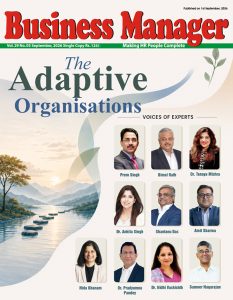
The candid perspectives shared by HR practitioners and industry experts in this cover story unfold many layers of EX, from data and design to empathy and well-being, reminding us that meaningful workplaces are built at the intersection of insight and humanity. A very interesting narrative!