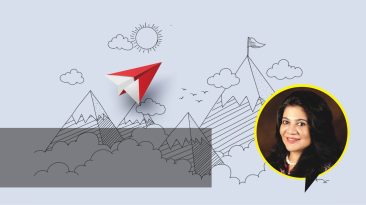
In a world where change is constant, organisational success is no longer defined by performance alone, it depends on the ability to adapt, learn, innovate, and evolve. In this conversation, Dr. Tanaya Mishra shares her perspectives on building agile organisations, breaking down silos, empowering...
Author - Dr. Tanaya Mishra
 is currently serving as Global CHRO of In Solutions Global Ltd. She has over 30 years of experience, of which twenty years have been in leading cross-border and cross-cultural assignments in Pharma, IT/ITES, Steel, Energy, EPC, Oil and Gas, Retail, consulting and many other industry sectors and served in leadership positions as Managing Director APAC/ Global CHRO/CPO. She has also been recognised and applauded for her contributions in the HR Field.

“Financial Wellness” is one big parameter besides “Physical and Mental Wellness”.“Nearly 73% of employees in India report being stressed about their finances, and this stress directly impacts workplace productivity and overall engagement,” reveals a recent survey by Deloitte[1]. With financial...

Organisations need to mandate that managers spend time understanding the importance of people skills and ensure that they are trained on soft skills and people skills.

How do you visualize the future of HR in Indian as well as global context? TM If I do some crystal gazing across India and the Globe I see “Change”, “Retraining”, “Re-skilling” emerge in bold, across all domains of Human Resources. This means that as a function...
There are managers who collect templates from companies that they have worked in and try to force fit them into their current organisations, but that will not work as the domains, culture and business agendas are different.

The management has to build practices through initiatives like "conduct counts" to ensure that that people behave respectfully with others.

These are then trained with both on and off the job training and are given special assignments and fast paced growth. Secondly, they identify employees who are capable but do not have the skills, they then retrain them and retain them. Thirdly, for employees who cannot be retrained, there are...